
Environmental Impact Statement (EIS)
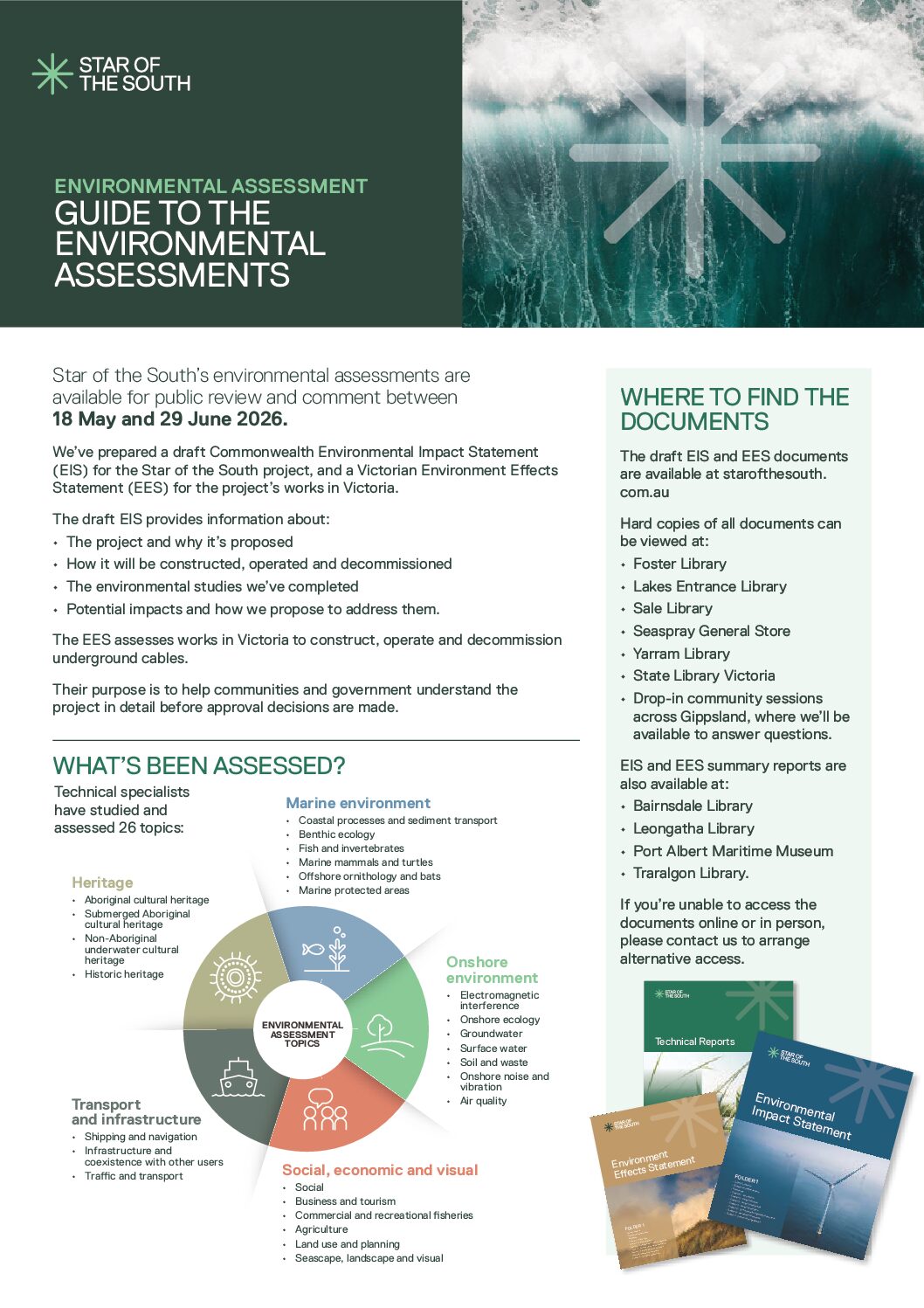
Star of the South’s draft EIS provides an assessment of Star of the South’s construction, operation and decommissioning activities and sets out measures to protect the environment at each stage.
Overview
Key details:
- Commonwealth Government process
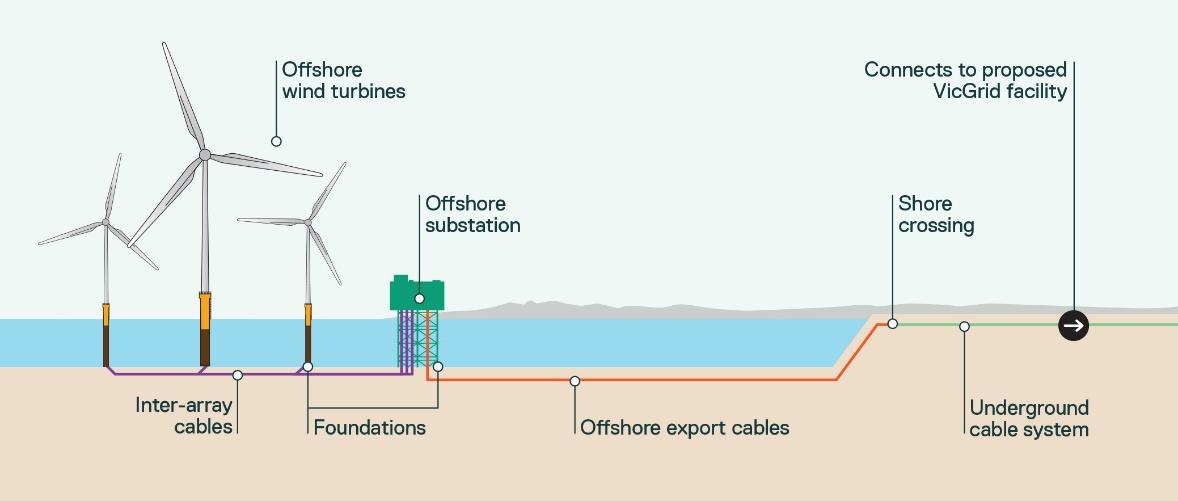
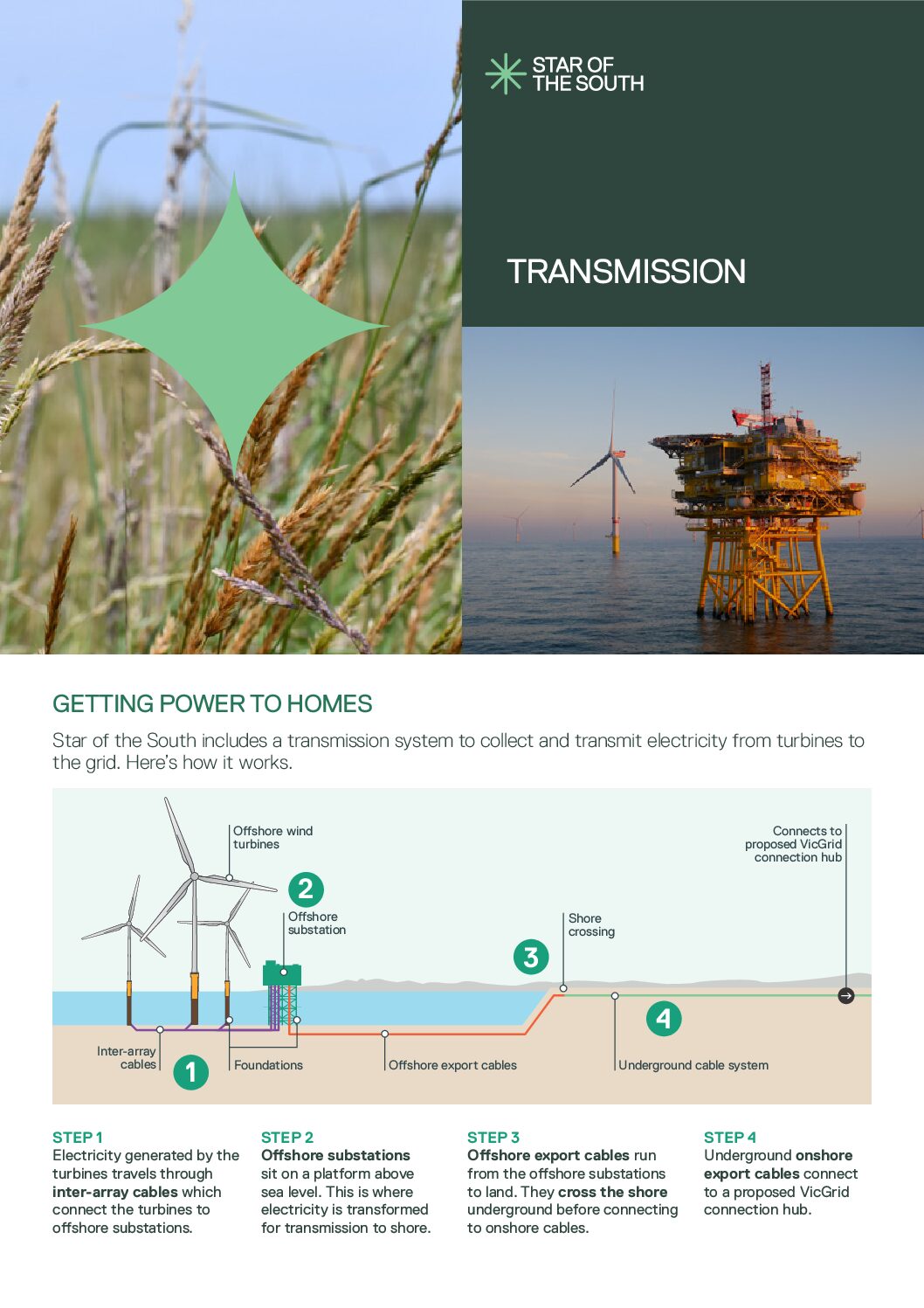
- Applies to the entire project (see diagram below)
- Results in an approval decision under the Environment Protection and Biodiversity Conservation Act 1999
EIS Documents
Summary Report
The summary report provides an overview of the project and information in the draft EIS.
Information Chapters
These chapters present information about the project, the legislative and assessment framework, and consultation undertaken.
- Table of contents – PDF, Word
- Glossary and abbreviations – PDF, Word
- References – PDF, Word
- Introduction – PDF, Word
- Project rationale – PDF, Word
- Project development – PDF, Word
- Project description – PDF, Word
- Legislative framework – PDF, Word
- Commonwealth assessment framework – PDF, Word
- Community engagement – PDF, Word
- Commonwealth Environmental Management Framework – PDF, Word
- EIS summary and conclusions – PDF, Word
Technical Chapters
These chapters present a summary of the assessment outcomes from the technical reports.
- Coastal processes and sediment transport – PDF, Word
- Benthic ecology – PDF, Word
- Fish and invertebrates – PDF, Word
- Marine mammals and turtles – PDF, Word
- Offshore ornithology and bats – PDF, Word
- Marine protected areas – PDF, Word
- Non-Aboriginal underwater cultural heritage – PDF, Word
- Commercial and recreational fisheries – PDF, Word
- Infrastructure and co-existence with other users – PDF, Word
- Shipping and navigation – PDF, Word
- Onshore ecology (EPBC matters) – PDF, Word
- Submerged Aboriginal cultural heritage – PDF, Word
- Social – PDF, Word
- Business and tourism – PDF, Word
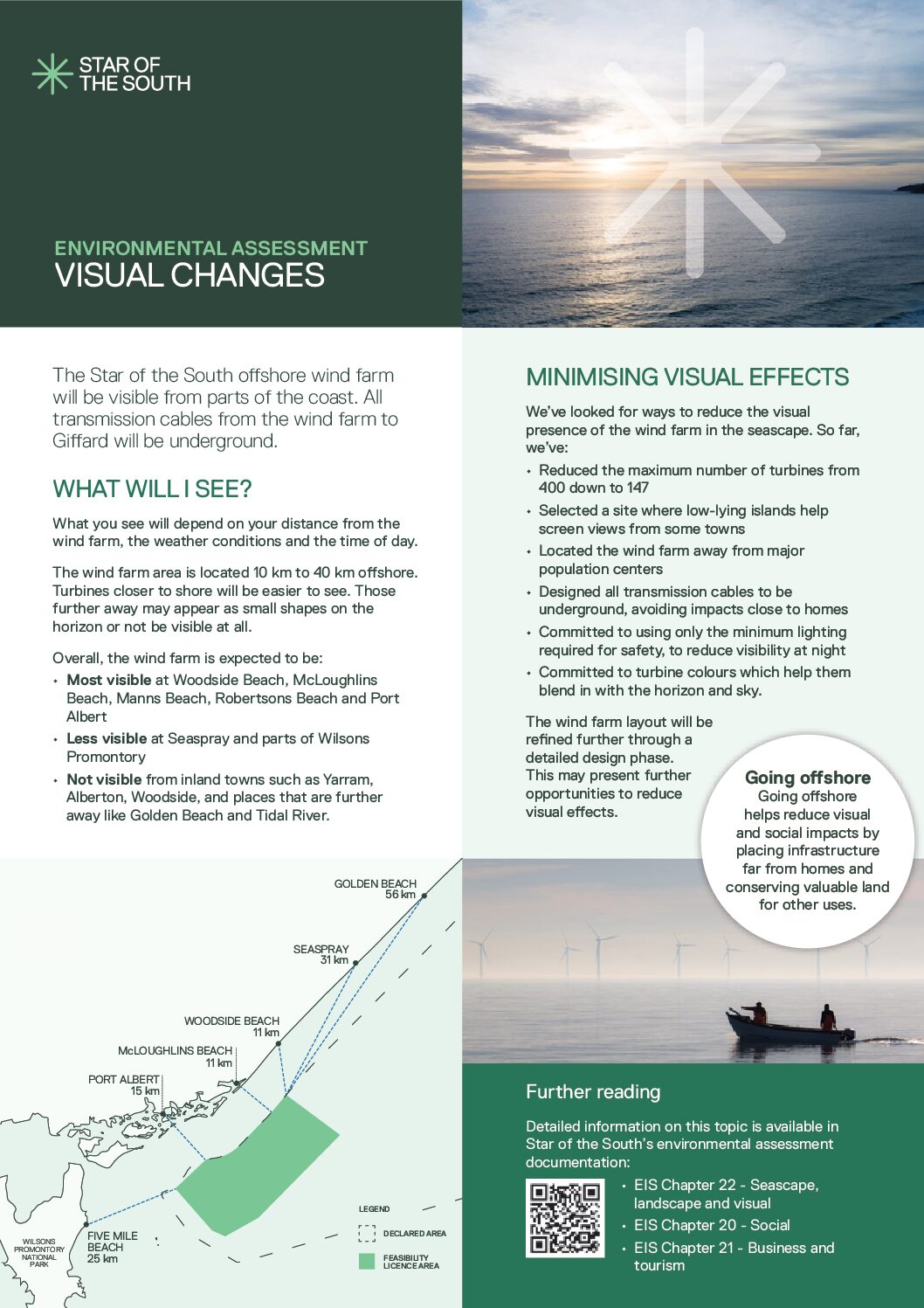
- Seascape, landscape and visual – PDF, Word
Attachments and Appendices
These documents provide additional information relating to the EIS.
Technical Reports
Each technical report assesses the entire project and is prepared by independent specialists. These reports detail the study methodology, existing conditions, impact assessment findings and proposed mitigation measures.
Submissions
EIS Process
Projects that could affect nationally important plants, animals, habitats or places must be assessed and approved under Australia’s main environmental law, the EPBC Act.
One way this assessment can be done is through an EIS.
Visit the Department of Climate Change, Energy, the Environment and Water website for more detail about the EPBC Act and how projects area assess.
Key steps in the Star of the South EIS process are:
We referred Star of the South under the EPBC Act in May 2020.
In June 2020, a delegate of the Minister for the Environment determined that the project is a controlled action and requires assessment and approval under the EPBC Act (2020/8650).
It was determined that the project should be assessed by an EIS.
Draft assessment guidelines setting out the matters to be investigated and documented in the EIS were prepared by the Department of Climate Change, Energy, the Environment and Water and released for public comment in July 2021. After considering submissions on the draft EIS assessment guidelines, the Australian Minister for the Environment approved final assessment guidelines in 2021.
Environmental surveys, community and stakeholder consultation, and technical studies and modelling were completed and documented in the draft EIS.
The draft EIS was available for public review and comment between 18 May and 29 June 2026
During the public review period, anyone was able to make a submission for consideration by Star of the South and the Australian Minister for the Environment.
We’re reviewing all submissions and updating the EIS accordingly, before submitting a final EIS.
After considering the final EIS, public submissions, and other relevant information, the Australian Minister for the Environment decides if the project is approved, approved with conditions, or not approved under the EPBC Act.
Other Commonwealth
Approvals
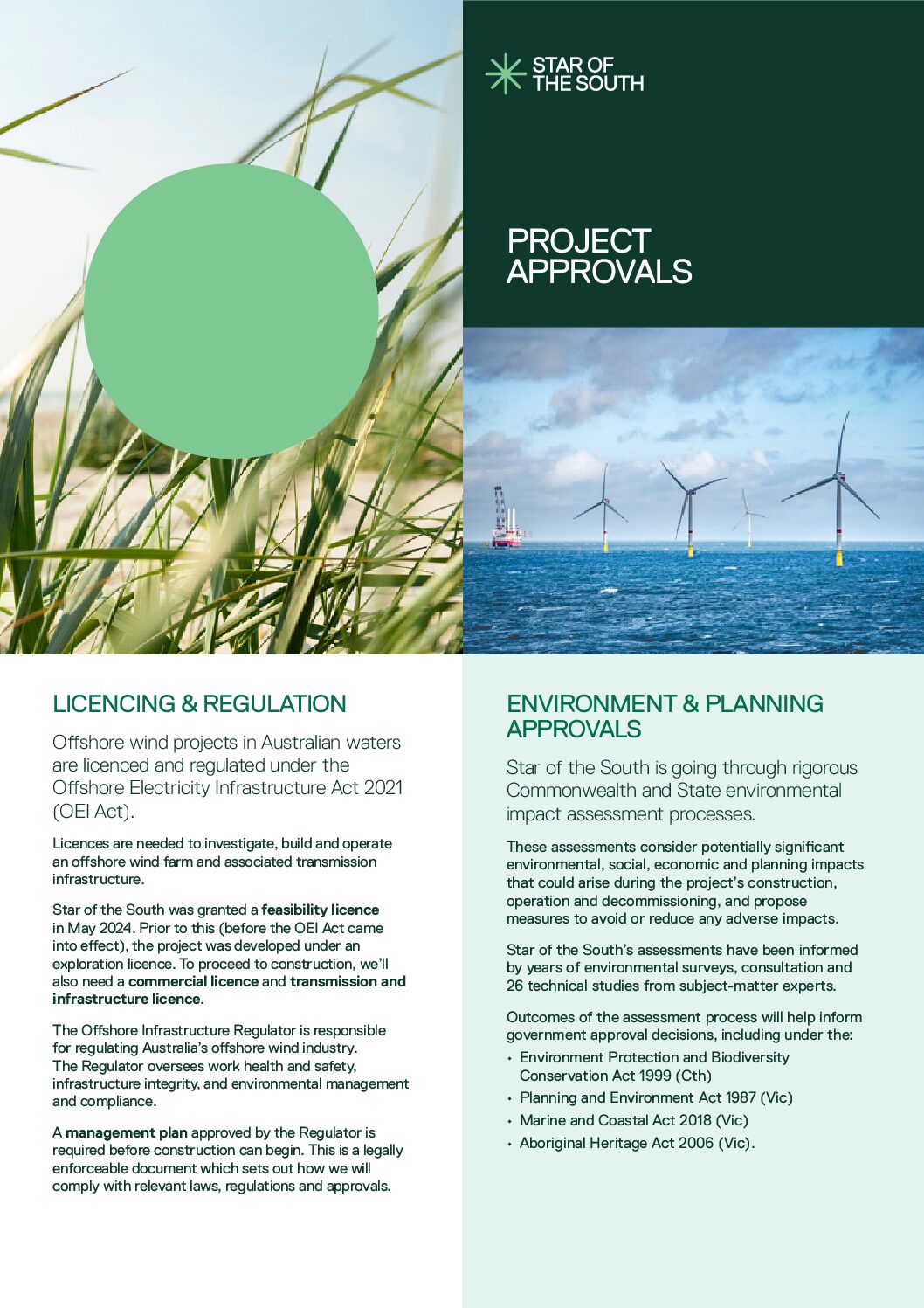
If Star of the South is approved under the EPBC Act, further Commonwealth approvals will be needed under the Offshore Electricity Infrastructure Act (OEI Act).
These approvals include:
- Management Plan approval
- A Commercial Licence
- A Transmission and Infrastructure Licence.
The management plan is a legally binding document. It will explain how the project will be built and run, and how risks to people, infrastructure and the environment will be managed, including how compliance with OEI Act requirements, EPBC approval conditions, and other legal requirements will be achieved. Preparation of a management plan involves detailed stakeholder consultation.
Community resources
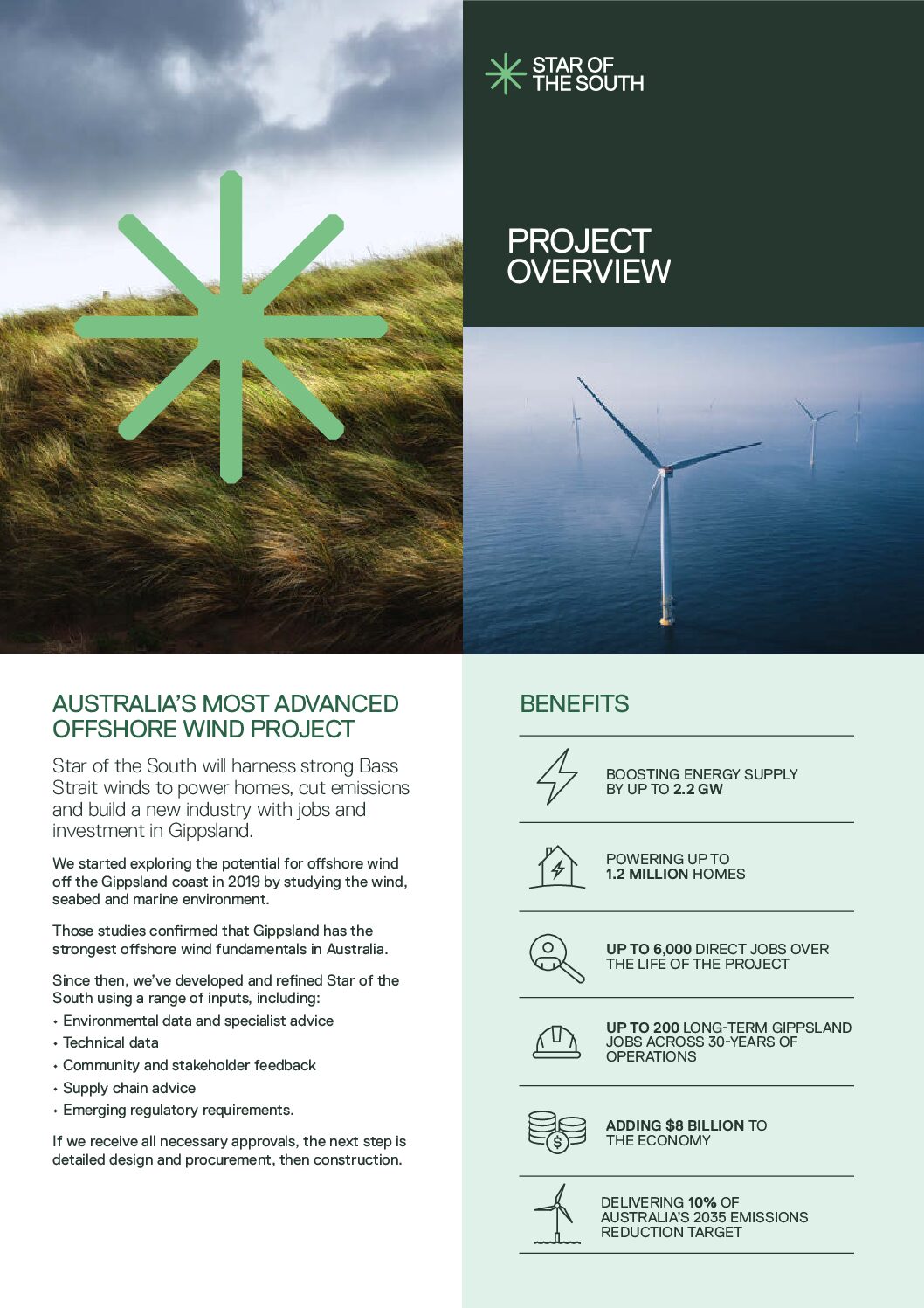
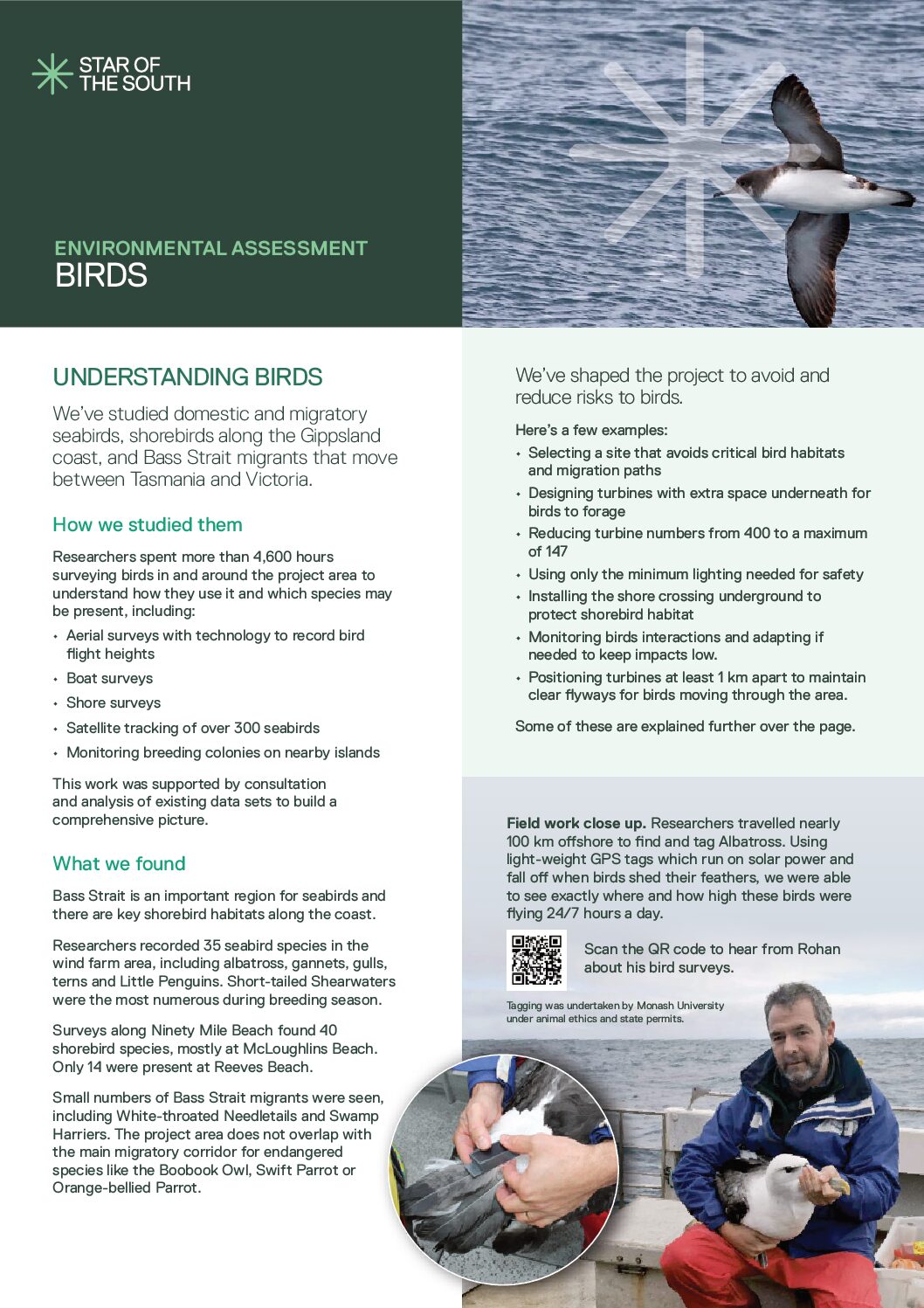
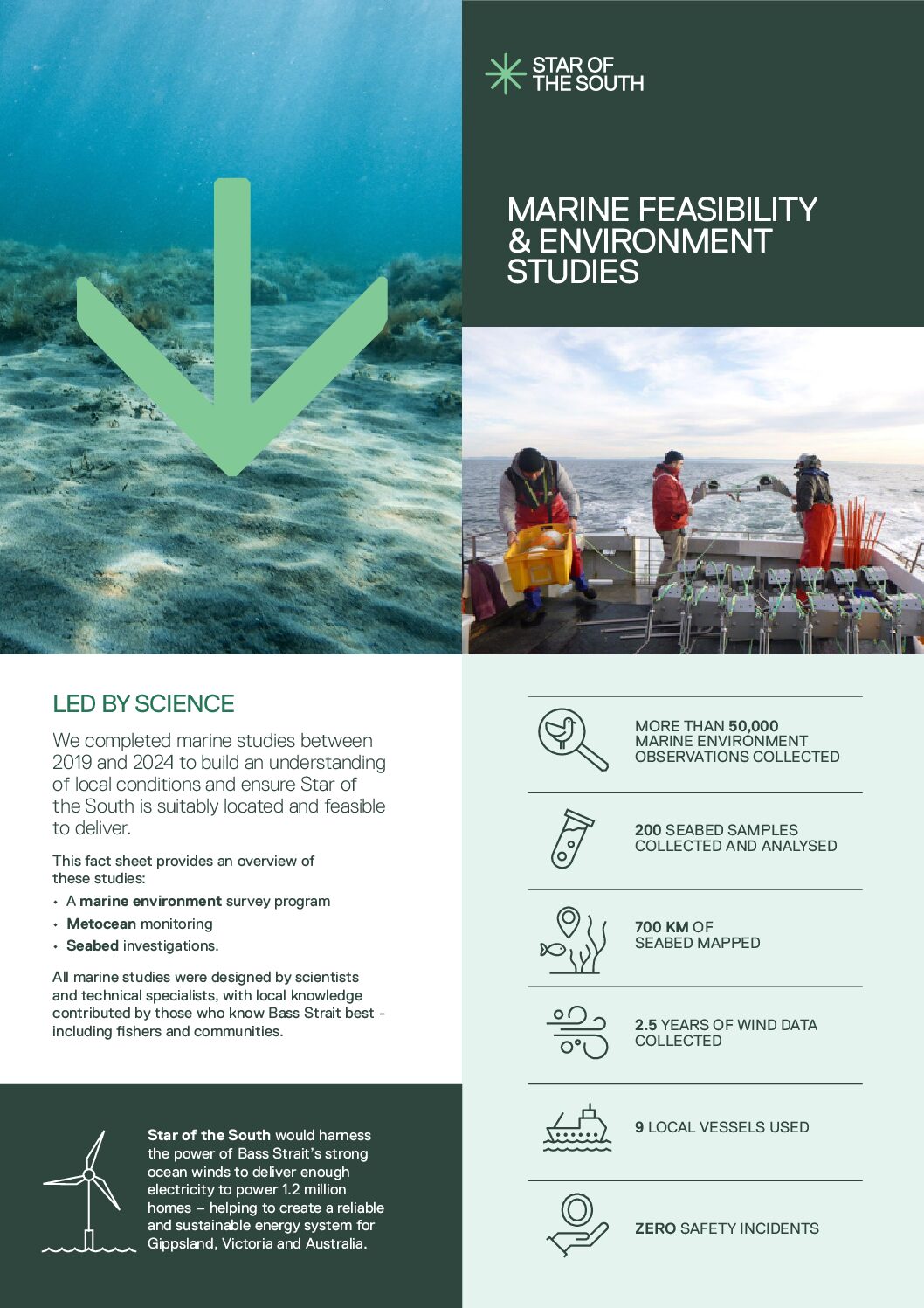
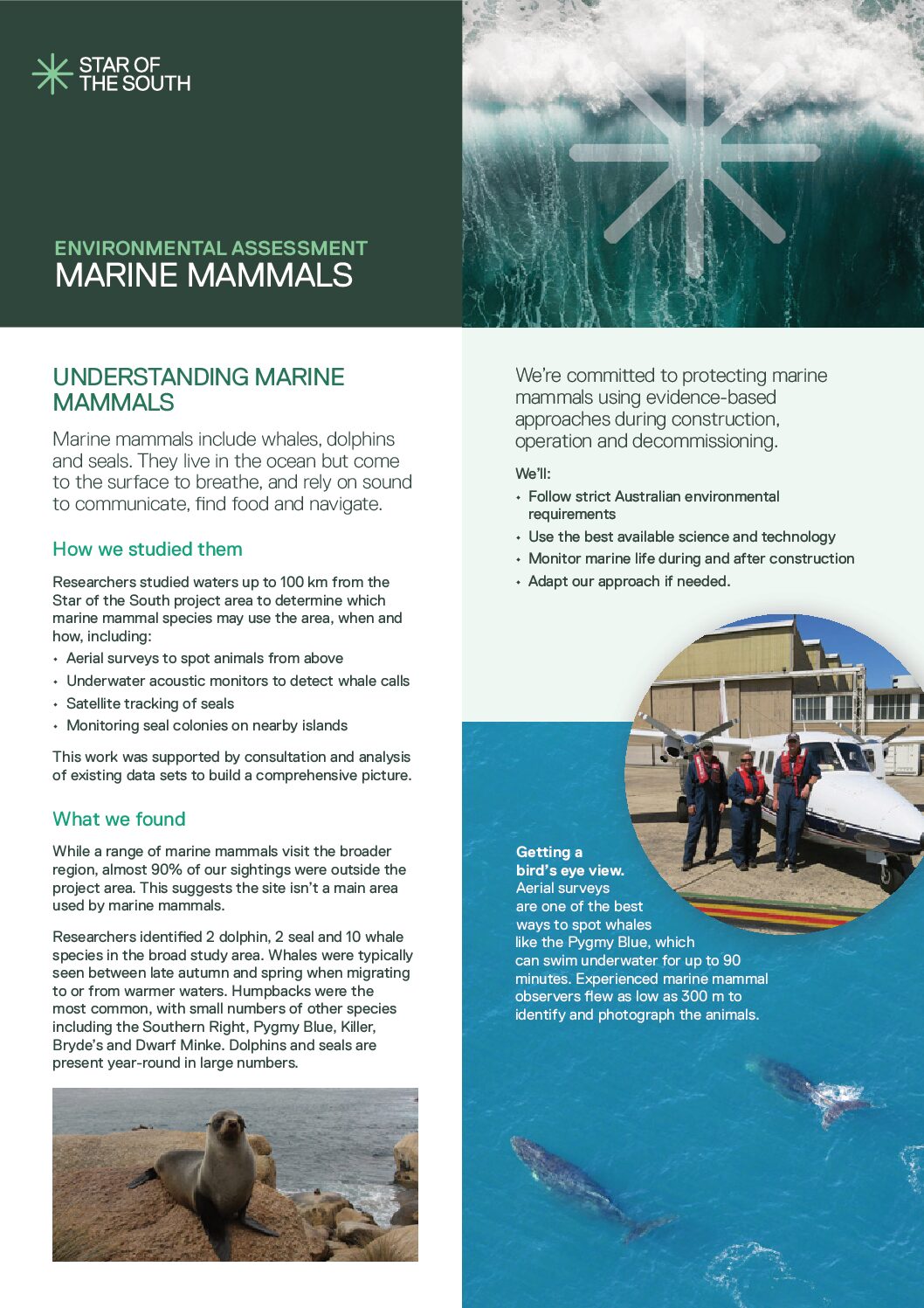
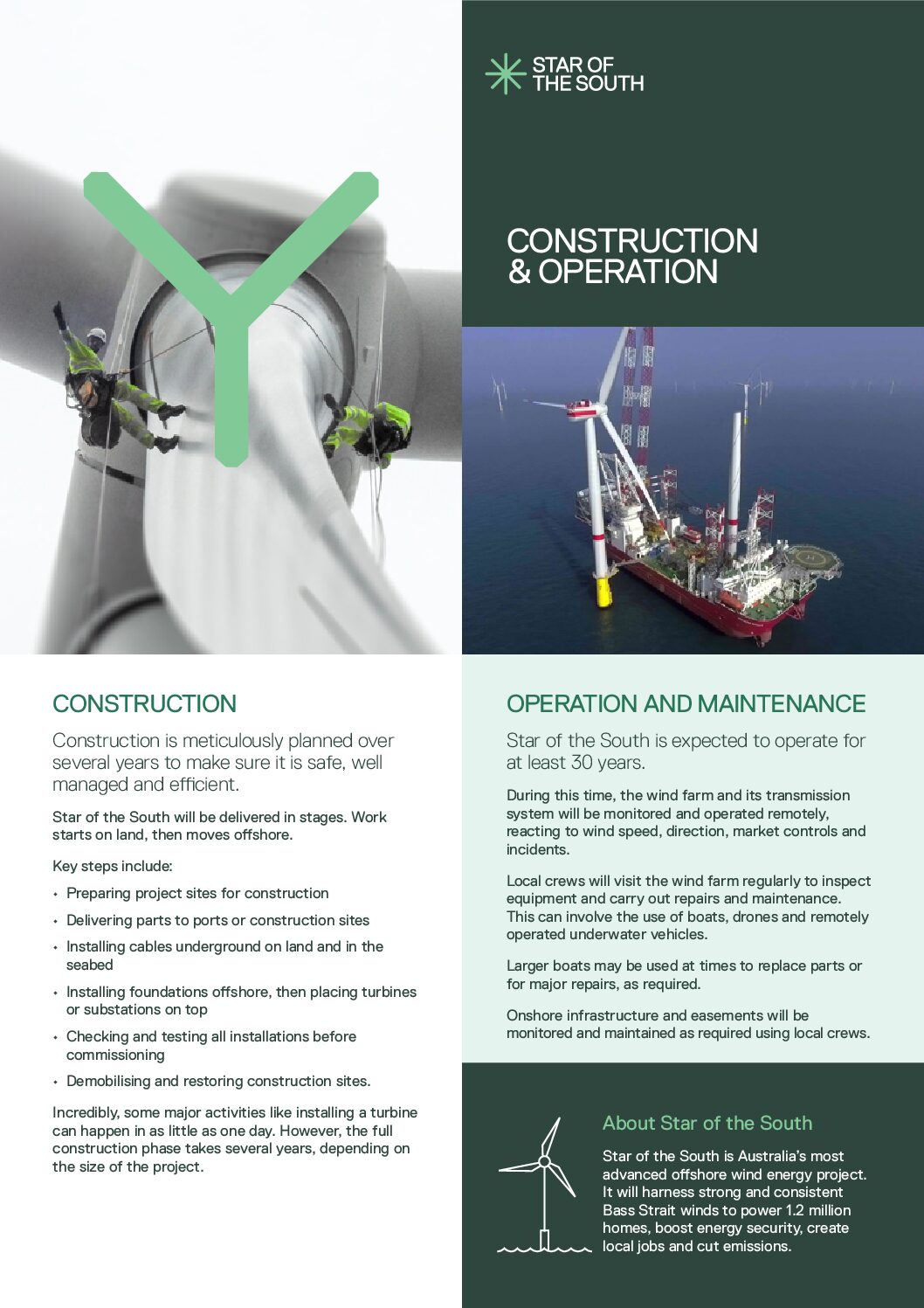
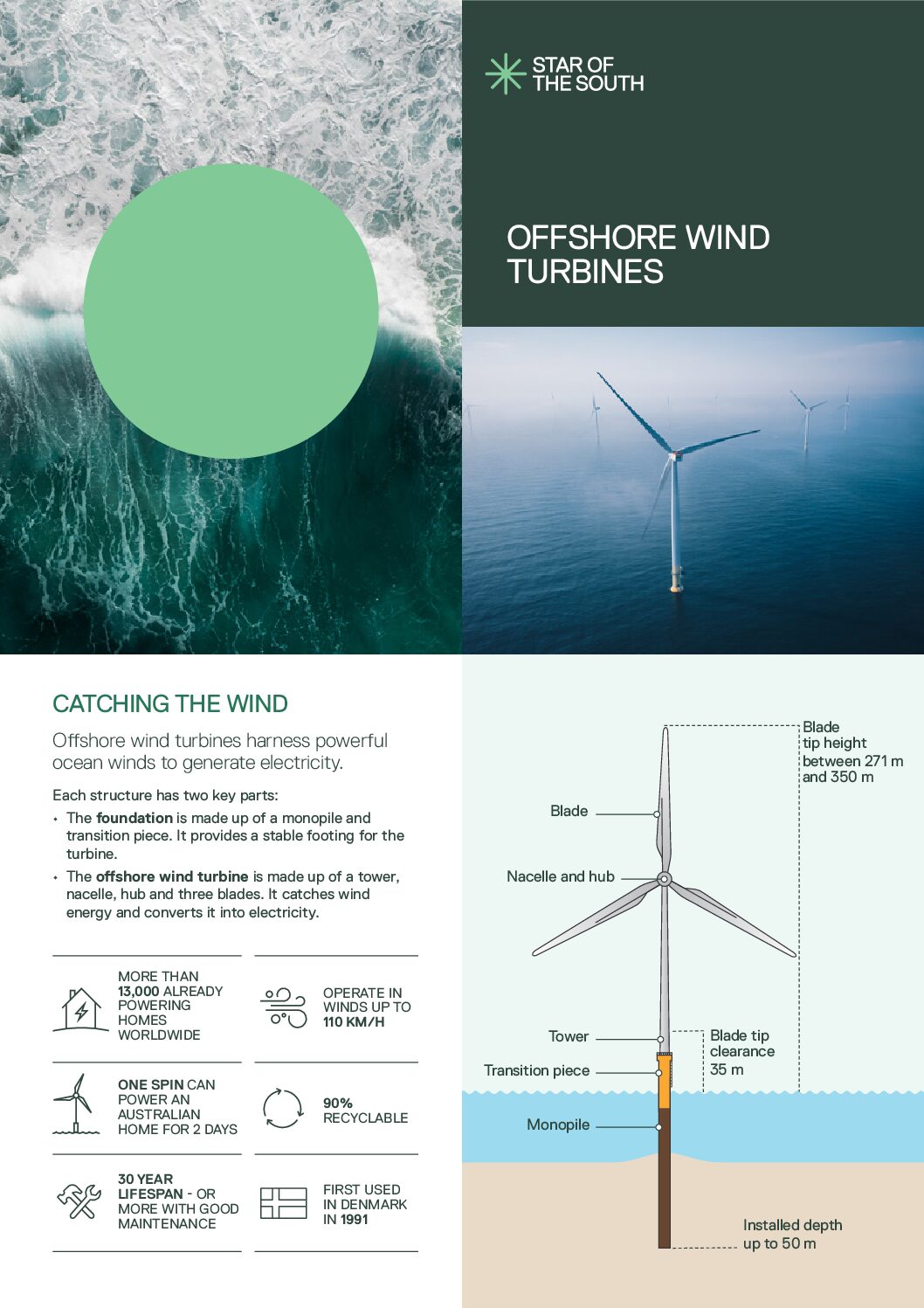
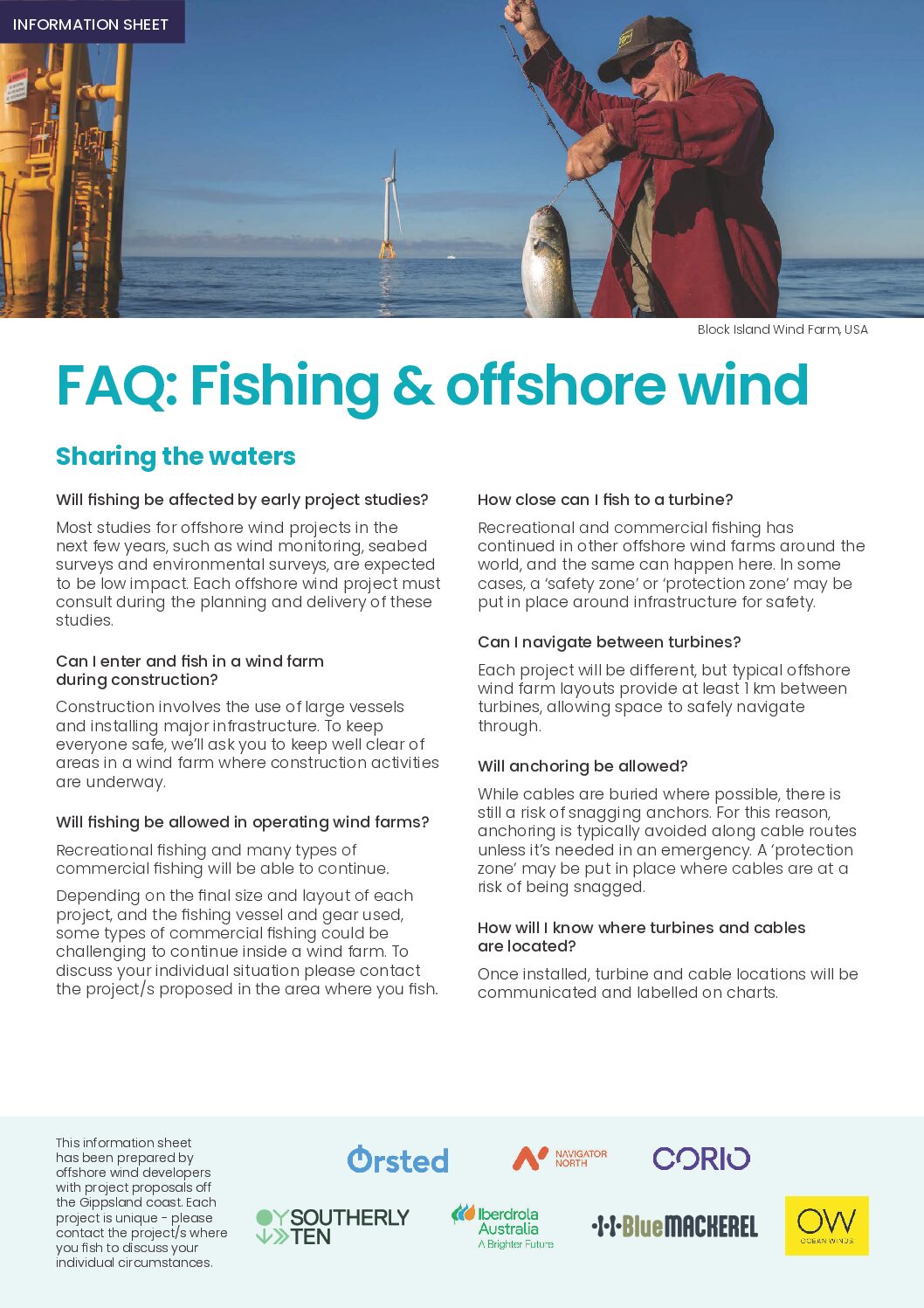
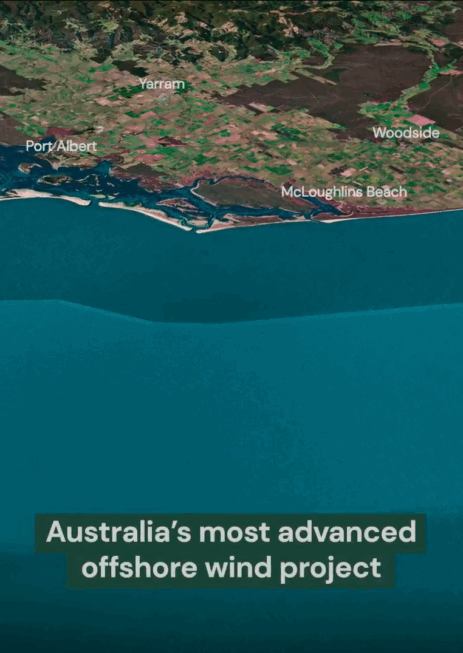
Star of the South project overview
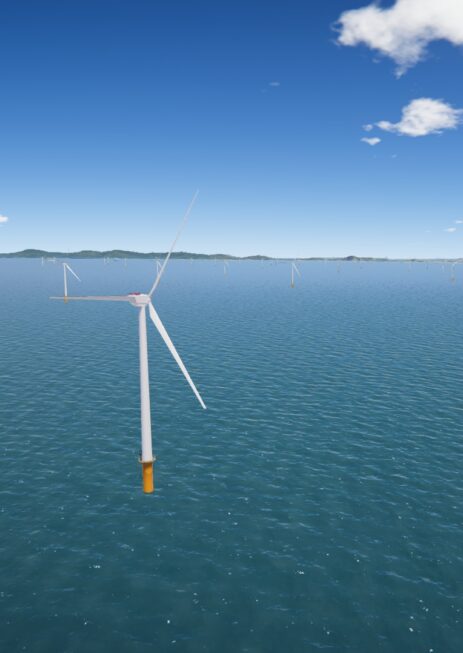
Installing wind turbines at sea
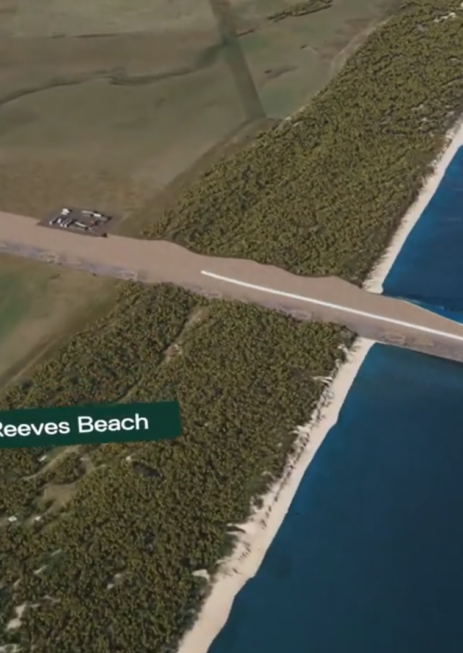
Installing the cable shore crossing